Are you considering a career in data but unsure which path to take? You're probably searching for answers to the question of data analysis vs data science, trying to understand which one is the best fit for you. The truth is, many people use these terms interchangeably, but they are distinct careers with different responsibilities and requirements. If you're looking to make an informed decision, it's essential to understand what each job entails on a daily basis. Data analysis and data science are both in high demand, but they require different skill sets and have different applications in various industries.
When it comes to the daily tasks, data analysts typically spend most of their time working with existing datasets to identify trends, create reports, and visualize data to help organizations make informed decisions. They work closely with stakeholders to understand business needs and develop solutions to address them. On the other hand, data scientists focus on more complex problems, using machine learning, programming, and statistical techniques to uncover hidden insights and develop predictive models. Data scientists often work on larger-scale projects, collaborating with cross-functional teams to design and implement new systems and processes. The maths requirements for these roles also differ significantly, with data scientists requiring advanced mathematical skills, including calculus, linear algebra, and probability.
In terms of job prospects, data analysis vs data science is an interesting comparison, especially in the African context. While data science is a rapidly growing field globally, data analysis is still the more dominant career path in many African countries. According to recent job listings, there are more openings for data analysts than data scientists in Nigeria, with salaries ranging from ₦150,000 to ₦500,000 per month (approximately $370 to $1,200 USD). Data science roles, on the other hand, are fewer but often come with higher pay, ranging from ₦250,000 to ₦1,000,000 per month (approximately $620 to $2,500 USD). Understanding these differences is crucial to making an informed decision about which career path to pursue.
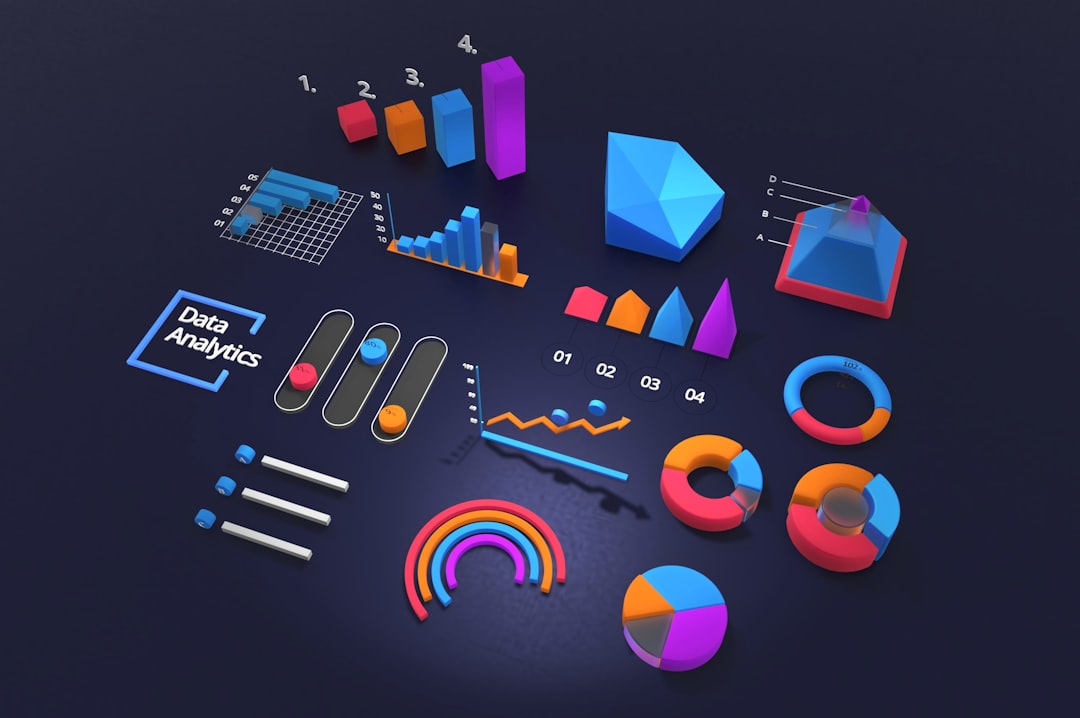
What is Data Analysis and What Do Data Analysts Do
Day-to-Day Tasks of a Data Analyst
Data analysis is the process of extracting insights and patterns from data to inform business decisions or solve problems. Data analysts are responsible for collecting, organizing, and analyzing data to help organizations make better decisions. On a typical day, a data analyst may spend around 4-6 hours working with data tools such as Microsoft Excel, Google Data Studio, or Tableau to create reports, dashboards, and visualizations. For example, a data analyst at a Nigerian e-commerce company like Jumia may use Excel to analyze sales data from the previous quarter, identifying trends and areas for improvement.
A data analyst's tasks may include creating reports on website traffic, customer behavior, or sales performance. They may also spend around 2-3 hours meeting with stakeholders to discuss their data needs and provide recommendations based on their analysis. According to a survey by the National Bureau of Statistics, the average salary for a data analyst in Nigeria is around ₦250,000 - ₦400,000 (approximately $620 - $1,000 USD) per month.
Maths Requirements for Data Analysis
While data analysis does require some mathematical skills, it is generally less mathematically intensive than data science. Data analysts need to have a good understanding of statistical concepts such as mean, median, and standard deviation, as well as data visualization techniques. They should also be familiar with data manipulation tools like SQL and data visualization software like Power BI. A data analyst may use statistical models like linear regression to forecast sales, but they are not expected to develop complex machine learning algorithms.
In terms of specific maths skills, data analysts should be able to work with numbers, calculate percentages, and understand basic algebra. For instance, a data analyst may need to calculate the conversion rate of a marketing campaign, which involves dividing the number of conversions by the total number of clicks and multiplying by 100. They should also be able to interpret the results of statistical tests, such as t-tests and ANOVA, to determine the significance of their findings.
Tools and Technologies Used in Data Analysis
Data analysts use a variety of tools and technologies to perform their tasks, including:
- Microsoft Excel: a spreadsheet software used for data analysis, reporting, and visualization
- Google Data Studio: a free tool used for creating interactive dashboards and reports
- Tableau: a data visualization software used for creating interactive and dynamic visualizations
- SQL: a programming language used for managing and manipulating data in databases
- Power BI: a business analytics service used for creating interactive visualizations and business intelligence reports
According to a report by Glassdoor, the most in-demand data analysis tools in Nigeria are Excel, SQL, and Tableau, with over 70% of job postings requiring proficiency in these tools. Data analysts should be able to learn these tools quickly and apply them to real-world problems, with a typical learning timeline of 1-3 months for each tool.
Data Science Job Description and Day to Day Tasks
Overview of Data Science Role
Data scientists are responsible for extracting insights from complex data sets, using a combination of mathematical, statistical, and computational techniques. They work with large datasets, often in the range of tens of thousands to millions of records, and use tools like Python, R, or SQL to analyze and visualize the data. A typical day for a data scientist may start with a meeting with stakeholders to discuss project requirements, followed by several hours of data exploration and cleaning using tools like Pandas, NumPy, and Matplotlib.
Data scientists typically spend around 60-80% of their time on data wrangling, which involves cleaning, transforming, and preprocessing data for analysis. This can be a time-consuming task, especially when dealing with large datasets. For example, a data scientist working on a project to analyze customer purchase behavior may spend several days cleaning and preprocessing a dataset of 10 million customer transactions, using tools like Excel, Trifacta, or OpenRefine.
Key Tasks and Tools
Some of the key tasks that data scientists perform on a daily basis include:
- Building and training machine learning models using tools like Scikit-learn, TensorFlow, or PyTorch, with the goal of achieving high accuracy and precision. For instance, a data scientist working on a project to predict customer churn may spend several weeks building and testing different machine learning models, with the goal of achieving an accuracy of 90% or higher.
- Creating data visualizations using tools like Tableau, Power BI, or D3.js, to communicate insights to stakeholders. A well-designed visualization can help stakeholders quickly understand complex data insights, and make informed decisions. For example, a data scientist working on a project to analyze website traffic may create an interactive dashboard using Tableau, to show stakeholders how website traffic varies by day of the week and time of day.
- Working with stakeholders to identify business problems and develop solutions, which can involve creating and presenting reports, dashboards, and other data products. Data scientists typically spend around 10-20% of their time on communication and stakeholder management, which can involve presenting findings to non-technical stakeholders, and working with cross-functional teams to implement solutions.
- Collaborating with data engineers to design and implement data pipelines, using tools like Apache Beam, Apache Spark, or AWS Glue. Data scientists typically work closely with data engineers to ensure that data is properly ingested, processed, and stored, and that data pipelines are scalable and reliable.
Data scientists also use a range of programming languages, including Python, R, and SQL, and may work with cloud-based platforms like AWS, Google Cloud, or Azure. They typically have a strong foundation in mathematics and statistics, and may use techniques like linear algebra, calculus, and probability to analyze and model complex data sets. For example, a data scientist working on a project to analyze customer behavior may use techniques like clustering and regression analysis to identify patterns and trends in customer data.
Mathematics and Statistics Requirements
Data scientists require a strong foundation in mathematics and statistics, including topics like linear algebra, calculus, probability, and statistical inference. They typically have a bachelor's or master's degree in a quantitative field like mathematics, statistics, computer science, or engineering, and may have completed coursework in machine learning, data mining, and data visualization. For instance, a data scientist working on a project to analyze customer behavior may need to have a strong understanding of statistical concepts like hypothesis testing and confidence intervals, as well as machine learning concepts like supervised and unsupervised learning.
In terms of specific math requirements, data scientists typically need to have a strong understanding of mathematical concepts like vectors, matrices, and differential equations, as well as statistical concepts like probability distributions, hypothesis testing, and confidence intervals. They may also need to have programming skills in languages like Python, R, or SQL, and experience working with data visualization tools like Tableau or Power BI. For example, a data scientist working on a project to analyze customer churn may need to have a strong understanding of mathematical concepts like logistic regression and decision trees, as well as programming skills in languages like Python or R.
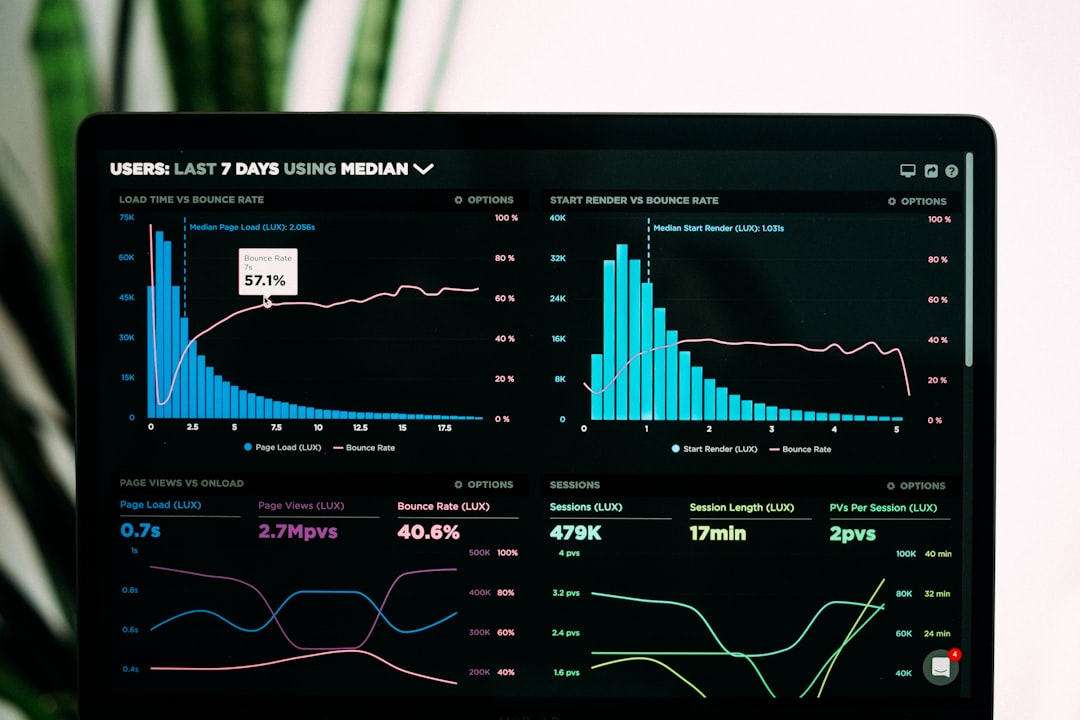
Maths Requirements for Data Analysis vs Data Science Careers
Data Analysis Maths Requirements
Data analysis involves working with existing data to identify trends, create reports, and inform business decisions. The maths requirements for data analysis are relatively straightforward, focusing on statistical concepts such as mean, median, mode, and standard deviation. Data analysts use tools like Microsoft Excel, Google Data Studio, or Tableau to create visualizations and reports. They also use statistical programming languages like R or Python, but the depth of knowledge required is not as extensive as in data science. For example, a data analyst might use Excel to calculate the average sales of a product over a 12-month period, which involves basic arithmetic operations and data visualization techniques.
In terms of specific maths skills, data analysts need to be proficient in:
- Descriptive statistics: calculating means, medians, and standard deviations
- Data visualization: creating charts, tables, and graphs to communicate insights
- Regression analysis: understanding relationships between variables, but not necessarily building complex models
- Hypothesis testing: using statistical tests to validate assumptions, such as t-tests or ANOVA
Typically, data analysts can develop these skills through online courses or certification programs, such as the Google Data Analytics Certification, which takes around 3-6 months to complete and costs approximately ₦150,000 - ₦300,000 (around $350-$700 USD).
Data Science Maths Requirements
Data science, on the other hand, involves a much deeper understanding of mathematical concepts, including machine learning, deep learning, and advanced statistical modeling. Data scientists need to be proficient in tools like TensorFlow, PyTorch, or Scikit-learn, and programming languages like Python, R, or Julia. They also need to understand linear algebra, calculus, and probability theory, which are essential for building and training machine learning models.
For instance, a data scientist working on a natural language processing project might need to understand concepts like vector spaces, eigenvalues, and eigenvectors to build a language model. They would also need to be familiar with optimization techniques, such as gradient descent, to train the model. In terms of specific maths skills, data scientists need to be proficient in:
- Linear algebra: understanding vector spaces, matrix operations, and eigenvalues
- Calculus: understanding derivatives, integrals, and optimization techniques
- Probability theory: understanding probability distributions, Bayes' theorem, and statistical inference
- Machine learning: building and training models using algorithms like decision trees, random forests, or neural networks
Developing these skills typically requires a strong foundation in mathematics and computer science, as well as extensive practice and experience. Data scientists often hold advanced degrees, such as a master's or Ph.D., and may have spent 2-5 years studying and working in the field. For example, a data scientist with a master's degree in computer science might have spent around ₦2,500,000 - ₦5,000,000 (around $6,000-$12,000 USD) on tuition fees and living expenses over a 2-year period.
In terms of time commitment, data scientists typically spend around 50-70% of their time on data modeling and machine learning tasks, 20-30% on data wrangling and preprocessing, and 10-20% on communication and visualization. In contrast, data analysts tend to spend more time on data visualization and reporting, around 40-60% of their time, and less time on advanced mathematical modeling, around 10-20% of their time.
Additionally, data scientists need to stay up-to-date with the latest developments in the field, which can be time-consuming and require a significant amount of effort. They need to read research papers, attend conferences, and participate in online forums to stay current with the latest techniques and tools. This can take around 5-10 hours per week, depending on the individual's level of expertise and the specific requirements of their job.
Data Analysis vs Data Science Salary Ranges in Africa
Overview of Salary Ranges
In Africa, the salary ranges for data analysis and data science roles vary based on factors like location, industry, experience, and specific job requirements. On average, data analysts in Nigeria can earn between ₦150,000 to ₦500,000 (approximately $375 to $1,250 USD) per month, depending on their level of experience and the company they work for. Data scientists, on the other hand, can earn significantly higher, with average monthly salaries ranging from ₦300,000 to ₦1,200,000 (approximately $750 to $3,000 USD). In other African countries like South Africa and Egypt, these figures can be even higher, with data scientists earning up to ₦2,000,000 (approximately $5,000 USD) per month.
Salary Ranges by Industry
Salary ranges for data analysis and data science roles also vary across different industries in Africa. For example, data analysts in the finance industry can earn higher salaries, with average monthly ranges from ₦250,000 to ₦700,000 (approximately $625 to $1,750 USD). In the healthcare industry, data analysts can earn between ₦180,000 to ₦450,000 (approximately $450 to $1,125 USD) per month. Data scientists in the finance industry can earn up to ₦1,800,000 (approximately $4,500 USD) per month, while those in the healthcare industry can earn up to ₦1,200,000 (approximately $3,000 USD) per month.
Tools and Technologies
Proficiency in specific tools and technologies can also impact salary ranges for data analysis and data science roles in Africa. For example, data analysts with expertise in tools like Excel, SQL, and Tableau can earn higher salaries, with average monthly ranges from ₦200,000 to ₦600,000 (approximately $500 to $1,500 USD). Data scientists with expertise in machine learning frameworks like TensorFlow, PyTorch, or Scikit-learn can earn even higher salaries, with average monthly ranges from ₦400,000 to ₦1,500,000 (approximately $1,000 to $3,750 USD). Some of the in-demand tools and technologies for data analysis and data science roles in Africa include:
- Microsoft Excel: ₦150,000 to ₦300,000 (approximately $375 to $750 USD) per month
- SQL: ₦180,000 to ₦400,000 (approximately $450 to $1,000 USD) per month
- Tableau: ₦200,000 to ₦500,000 (approximately $500 to $1,250 USD) per month
- TensorFlow: ₦300,000 to ₦800,000 (approximately $750 to $2,000 USD) per month
- PyTorch: ₦350,000 to ₦900,000 (approximately $875 to $2,250 USD) per month
- Scikit-learn: ₦250,000 to ₦600,000 (approximately $625 to $1,500 USD) per month
Job Outlook and Hiring Trends
Currently, there is a higher demand for data analysis roles in Africa, particularly in industries like finance, healthcare, and e-commerce. Data analysis roles are more prevalent in the African job market, with companies like MTN, Dangote, and Jumia hiring data analysts to work on projects like customer segmentation, market trend analysis, and business intelligence. However, data science roles are also gaining traction, with companies like Andela, Flutterwave, and Interswitch hiring data scientists to work on projects like machine learning model development, natural language processing, and predictive analytics. As the African economy continues to grow and digitize, the demand for both data analysis and data science roles is expected to increase, with average salary ranges expected to rise by 10-20% over the next 2-3 years.

Which Field Has More Job Openings in Nigeria and Other African Countries
Current Job Market Trends
In Nigeria and other African countries, the demand for data professionals is on the rise. However, the number of job openings for data analysis and data science roles differs significantly. According to recent job listings on platforms like LinkedIn, Indeed, and Glassdoor, data analysis roles have more job openings than data science roles. For instance, a search for "data analyst" jobs in Nigeria on LinkedIn yields over 200 results, with companies like MTN, Airtel, and Stanbic IBTC hiring. In contrast, a search for "data scientist" jobs yields around 50 results.
This trend is also reflected in other African countries. In South Africa, data analysis jobs have a higher demand, with companies like Standard Bank, ABSA, and Shoprite hiring data analysts. In Kenya, data analysis jobs are also more prevalent, with companies like Safaricom, KenGen, and East African Breweries hiring data professionals. The average salary for a data analyst in Nigeria is around ₦400,000 - ₦700,000 (approximately $1,000 - $1,800 USD) per month, while in South Africa, it is around R25,000 - R45,000 (approximately $1,700 - $3,000 USD) per month.
Reasons for the Difference in Demand
Several factors contribute to the higher demand for data analysis roles. One reason is that data analysis is a more established field, and many companies have been using data analysis for years to inform business decisions. Additionally, data analysis requires less advanced mathematical and computational skills than data science, making it more accessible to a wider range of professionals. Data analysis typically involves working with tools like Microsoft Excel, SQL, and Tableau, which are widely used in many industries.
- Data analysis is used in various industries, including finance, healthcare, and retail, which are large employers in many African countries.
- Many companies in Africa are still in the process of building their data analysis capabilities, creating a high demand for professionals with data analysis skills.
- Data analysis projects often have a shorter timeline than data science projects, typically lasting a few weeks or months, which makes them more appealing to companies with urgent business needs.
In contrast, data science roles require more advanced skills in machine learning, programming languages like Python and R, and deep learning frameworks like TensorFlow and PyTorch. While there is a growing demand for data science professionals in Africa, the number of job openings is still lower than for data analysis roles. However, this is expected to change in the next 2-3 years as more companies adopt advanced data science technologies and build their own data science teams.
Key Industries and Companies Hiring Data Professionals
In Nigeria, key industries hiring data professionals include finance, telecommunications, and retail. Companies like Guaranty Trust Bank, Zenith Bank, and MTN are hiring data analysts and data scientists to work on projects like customer segmentation, credit risk modeling, and network optimization. In South Africa, companies like Standard Bank, ABSA, and Shoprite are hiring data professionals to work on projects like market research, customer insights, and supply chain optimization.
According to a report by the Nigerian Bureau of Statistics, the finance and telecommunications industries are expected to experience significant growth in the next 5 years, creating more job opportunities for data professionals. The report also highlights the importance of data analysis and data science in driving business decisions and improving operational efficiency.
Frequently Asked Questions
What is the main difference between Data Analysis and Data Science?
Data Analysis focuses on extracting insights from existing data, while Data Science involves a broader range of skills to uncover new patterns and predict future trends, requiring more advanced technical skills.
Do I need to be a programmer to become a Data Analyst or Data Scientist?
Yes, programming skills are necessary, with Data Analysts typically using tools like Excel and SQL, and Data Scientists using programming languages like Python and R, with a stronger emphasis on coding.
How long does it take to learn Data Analysis or Data Science skills?
It typically takes 3-6 months to learn basic Data Analysis skills, while Data Science skills can take 1-2 years to develop, depending on the individual's background and dedication to learning.
Are Data Analysis and Data Science careers well-paying in Nigeria?
Yes, Data Analysis and Data Science careers are relatively well-paying, with average salaries ranging from ₦500,000 to ₦2 million per month, or $1,200 to $4,800 USD, depending on experience and industry.
Where to go from here
Webbo3 Academy runs live online classes taught by real instructors, with AI-guided lessons in between. If this is the direction you want, the next step is to see the course structure and what the first week covers. You can also register to get started.